The Intra-Gotham Clash of Titans
Updated: Jul 29, 2025
During the barnstorming era of (semi-) professional basketball, roughly 1920 to 1950, two of the leading clubs were from New York City: the Rens (or Renaissance) and the Original Celtics (not to be confused with a certain franchise in Beantown). The rivalry between these squads centered around talent, basketball knowhow, and race too. The all-black Rens persistently faced bias on the road. For the team’s founding owner and manager, Smilin’ Bob Douglas, one of the top objectives was indeed to set an example of Afro-American excellence and dignity, in the hopes of cutting into the prejudices of many American citizens. Against this backdrop, the Harlem-based team’s matchups versus the entirely-white Celtics were rather heated.
Despite its growing popularity, basketball had yet to prove itself at the box office. These financial challenges were only exacerbated by the Great Depression. Consequently, the Rens and Celts depended on one another for their livelihoods, as the matchups between the two squads drew big crowds. By virtue of their regular confrontations on the hardwood, the opposing players developed a mutual respect.
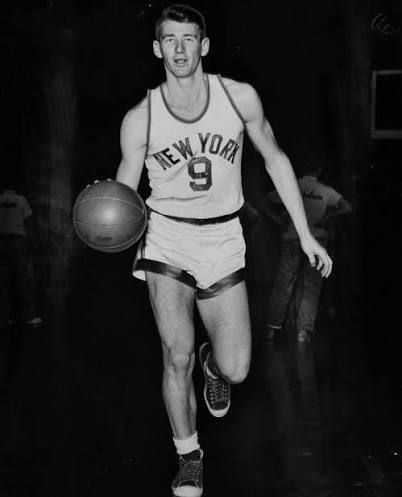
“The Rens’ fight against racism,” Kareem Abdul-Jabbar observes, “got some welcomed support from none other than their longtime rivals the [Original] Celtics. Before each game” pitting these fierce rivals, the Celts’ gifted pivotman “Joe Lapchick would hug” the opposing star center “Tarzan Cooper in front of the crowd, letting them know how the Celtics felt about the Rens – and racism.” Given the period involved, “this show of affection was more than a casual gesture, and it resulted in years of vitriolic epithets and death threats” against Lapchick. As an aside, the Yonkers native went on to become a highly successful coach for both St. John’s University and the New York Knicks.
According to Douglas, “When we [the Rens] played against most white teams, we were colored. Against the Celtics, we were men. Over those last years a real brotherhood” developed between the two clubs “that was born out of competition and travel.”



Comments